Break the disease cycle before you have to spray it.
NULAND Agritech is an agricultural technology and advisory group built around a single idea: most crop protection programmes start too late. We work the layer underneath the spray programme — water, surfaces, soil, crop residue and nutrition — so growers need less chemistry to hold the same standard.
Inoculum first. Chemistry last.
A fungicide applied to a crop already carrying a heavy pathogen load is doing remedial work. It costs more, it selects for resistance, and it puts residue on fruit that has to clear an importing country's limits. The cheapest intervention in the whole programme is the one that stops the pathogen arriving.
The pyramid is not ours — it is standard integrated pest management. What most operations get wrong is the base. Layer 01 is where NULAND does its work, and it is the layer that decides how much of layer 05 you need.
Three domains. One footprint.
A crop's chemical footprint is not set by the spray programme alone. It is set in three places: the water and surfaces that carry pathogens to the plant, the soil and residue that hold them between seasons, and the nutrition that decides how susceptible the plant is when they arrive. Work only one and the others undo you. We work all three, and we report the total.
Water & surfaces
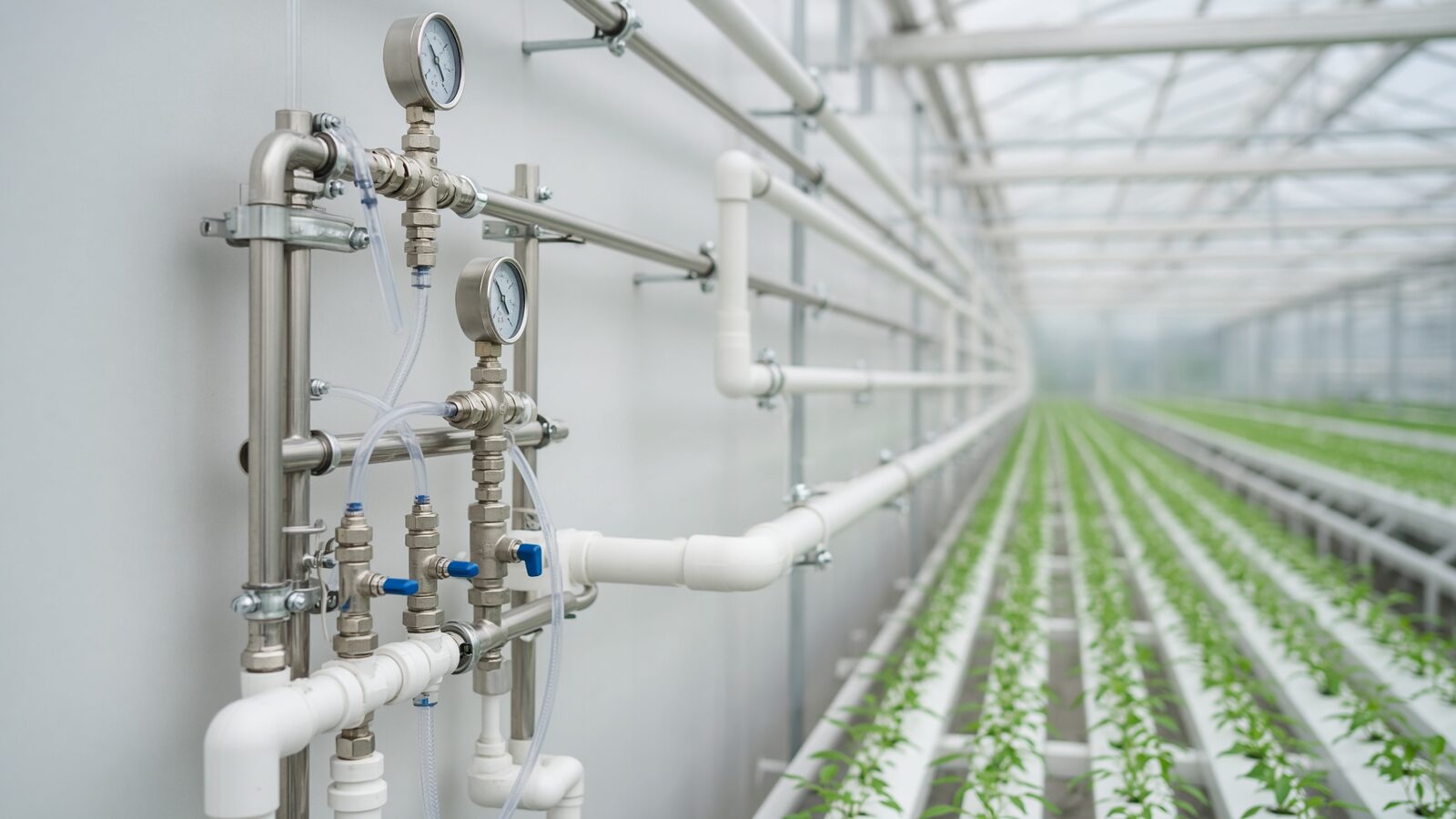
Irrigation and fertigation lines, greenhouse wet-walls and misting systems, benches, trays, tools and footbaths, cold rooms, packhouse wash and dump-tank water, and recycled water loops. Dosing design, biofilm and algae management, titration-based verification, and the engineering that puts a dosing point where it actually changes the outcome.
Where the pathogen arrives.
Soil & crop residue
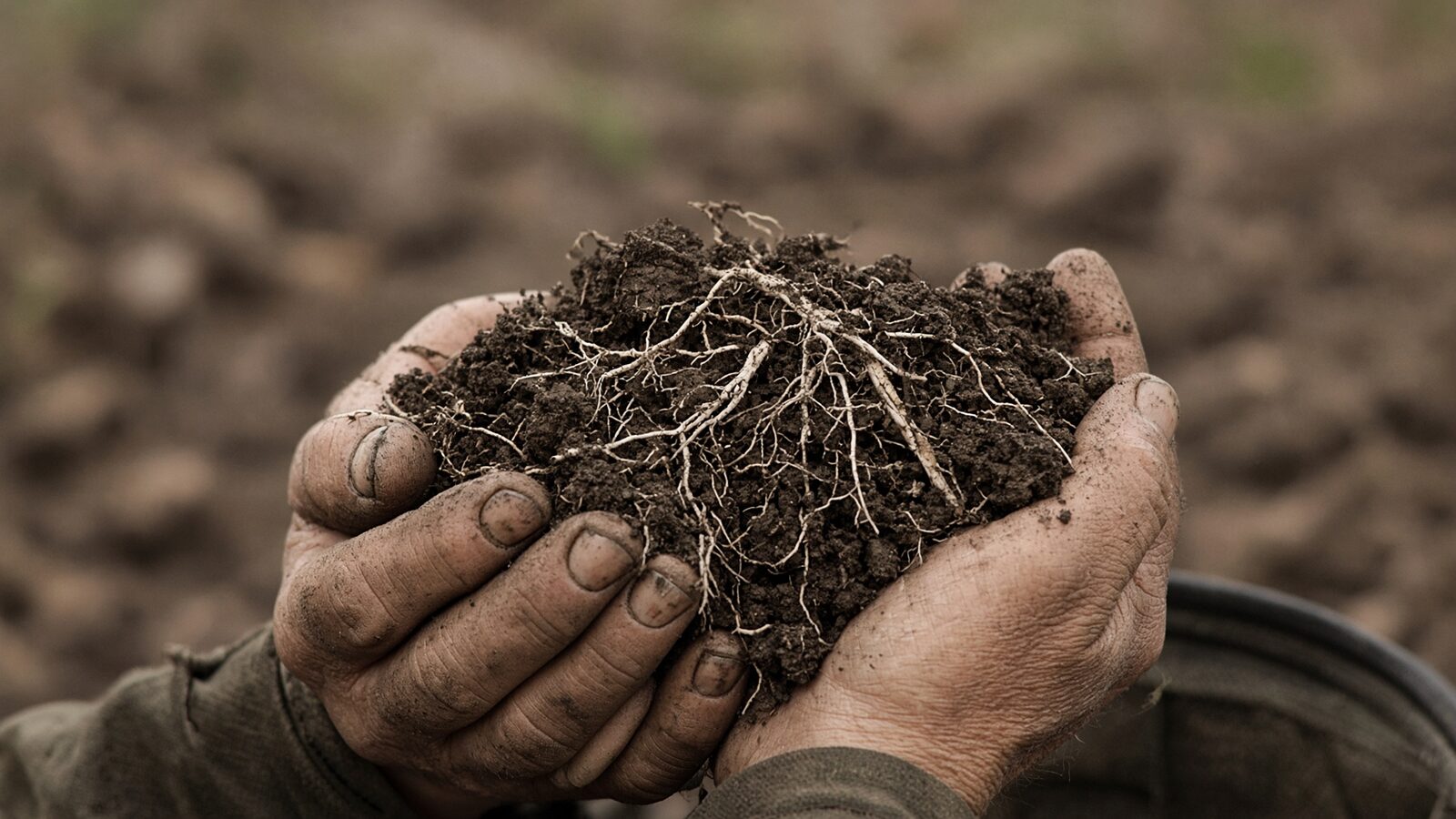
Crop residue is not waste — it is next season's inoculum reservoir, and in much of our footprint it is still burned. We work residue handling, decomposition and orchard-floor hygiene alongside soil health: organic matter, biology, structure and the conditions that make a soil suppress disease rather than store it.
Where it waits between seasons.
Nutrition
Slow-release, controlled-release and stabilised fertilisers, and the rate, timing and placement advice that usually matters more than the product does. Over-application is itself chemical footprint — it leaches, it volatilises, and it changes how susceptible a crop is to the disease you are then paying to spray.
Where susceptibility is decided.
And three ways we deliver it
Programme design & consulting
IPM programme design, residue and MRL strategy for export crops, packhouse and storage hygiene audits, resistance-management planning, nutrient budgeting, and operator training. Our pest-management practice grew out of work inside ITC's agri operations in India, where the discipline was stored-commodity protection at industrial scale.
Distribution & registration
We hold distribution rights for SporeKill® across our territories and we manage the registration pathway that has to precede any sale — EPA and state registration in the US, APVMA in Australia, CIB&RC in India, ICA in Colombia. Product access without a valid local registration is not access; it is a liability.
Trials & research programmes
Replicated field and packhouse trials, efficacy and phytotoxicity screening on locally grown varieties, inoculum load monitoring across a season, residue decomposition trials and post-harvest decay work. We publish what we find to the growers who funded it, including the results that do not favour the product.
Export market access
Food export programme development in West Africa, working with KRP Ventures in Liberia and partners elsewhere on the same bottleneck: produce that is grown well and then lost between the field and the buyer. Post-harvest handling, cold-chain hygiene, residue and waste management, and the documentation an importing market actually asks for.
Three ways in
Foundation — product, a dilution card in your language, and an agronomist on the phone. For single-block and smallholder growers.
Protocol — a site audit across all three domains, mapped dosing points, and quarterly verification.
Systems — engineered dosing, validation sampling, operator training and an audit pack for your certification body.
The food already exists. It is being lost.
of the world's food is lost between harvest and retail — 23.0% in sub-Saharan Africa, 25.4% for fruit and vegetables. That figure has barely moved since the 2015 baseline of 13.0%.
FAO Food Loss Index, SDG indicator 12.3.1(a). Food loss — farm to retail. It is a different measure from consumer food waste and the two cannot be added together.
Food security has four recognised dimensions: availability, access, utilisation and stability. We work in two of them — availability and stability — and only in the stretch between the field and the store.
We do not work on access, and access is where the binding global constraint now sits. Being honest about that is the point: a company that claims to move all four is not describing a business, it is describing a brochure.
Oerke (2006), Journal of Agricultural Science. This is the evidence behind “chemistry last” — and it comes from inside the mainstream crop-protection literature, not from us.
Input integrity
Seed is a recognised pathway for pests and pathogens — the IPPC governs it as one under ISPM 38. A lot of unknown provenance is an uncontrolled entry point into a field.
Post-harvest loss
Cold rooms, packing sheds, dump tanks and storage. This is the layer the loss figure is measuring, and it is the layer our product and protocol work actually touches.
Stability, not averages
A grower who knows what went into the ground, and under what storage conditions, carries less variance. Variance — not average yield — is what turns a bad season into a food-insecure household.
The instruction is already on the label.
SporeKill's registered directions for surfaces begin: “First remove all organic matter from surfaces.” Residue management is not a new business line bolted onto a disinfectant. It is the precondition the registration itself states — inoculum first, chemistry last, printed on the product by the people who registered it.
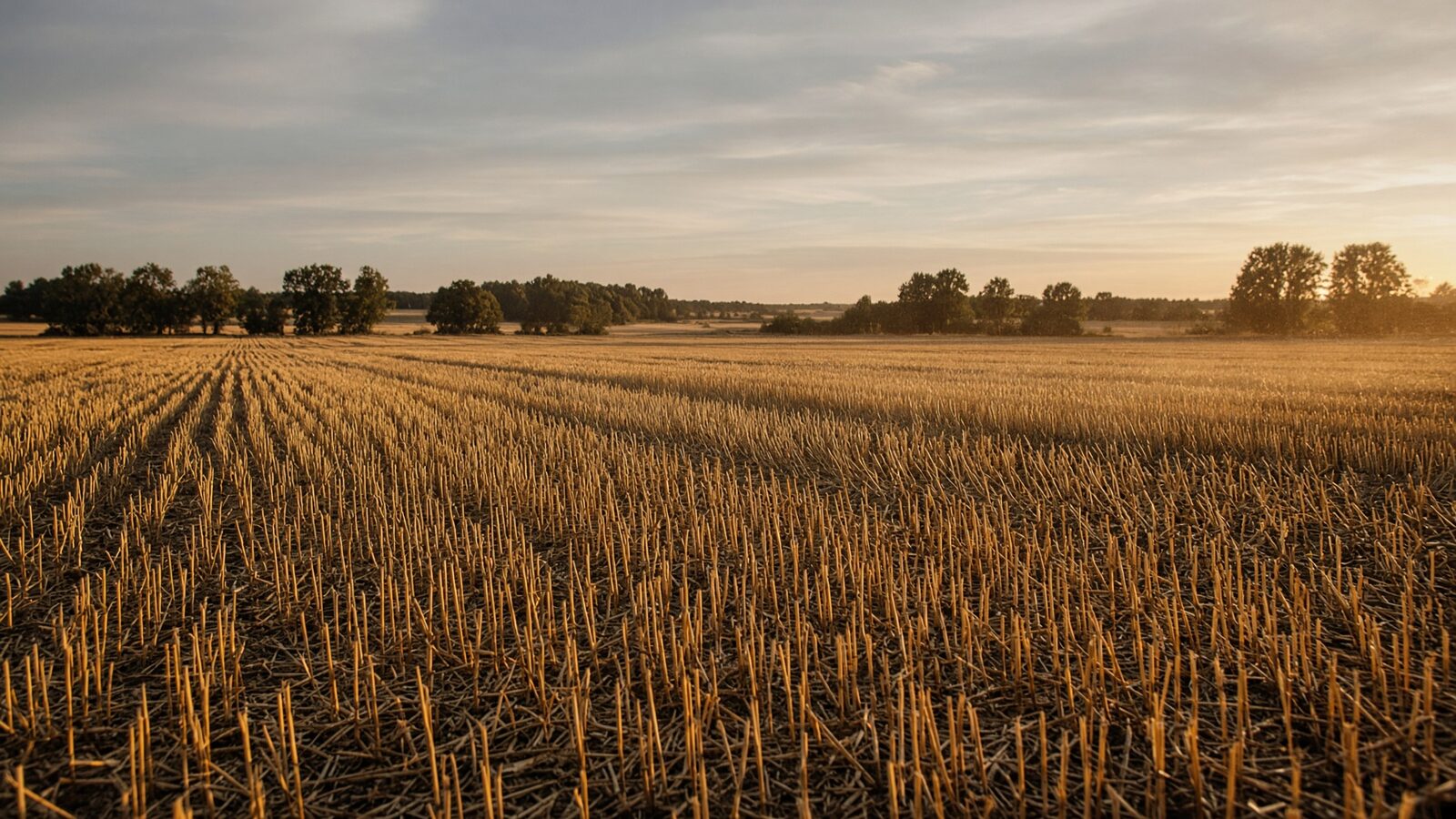
Crop residue is where pathogens survive between crops. It is the biggest item in the base layer and the only one no disinfectant can reach — a contact sanitiser cannot be sprayed across a paddock of stubble and is not registered to be.
So the work is physical and it is advisory: where the residue sits, what is living in it, whether it should be buried, baled, grazed or left, and where the next crop should be sown relative to it.
The evidence, rung by rung
We publish this ladder because the argument gets weaker as it goes down, and a grower is entitled to know exactly where it stops carrying weight.
| Link in the chain | Strength | Why |
|---|---|---|
| Residue is an inoculum reservoir | Strong | Named pathogens, regulator advisories, and a clear dose-response with how much residue is buried or exported. |
| Removing or burying residue reduces inoculum | Strong | Buried residue stops being a source of airborne inoculum. Western Australia's DPIRD advises growers to manage stubble and avoid sowing on or downwind of infected stubble. |
| Less inoculum means less disease | Conditional | Often not the limiting factor for polycyclic diseases. The reviews are explicit that field-scale residue management may not reduce final severity in a sustained way. |
| Less disease means fewer applications | Not established | Demonstrated for apple scab and leaf litter, and essentially nowhere else. We treat it as a hypothesis to test on your block, not a claim to sell. |
Note also that for stubble-borne cereal disease the regulator's advice runs the other way from the popular one: retaining residue is not a disease-reduction measure. Burning, baling, grazing, windrowing and incorporation are the inoculum levers. What is right for your soil carbon and what is right for your disease pressure are frequently in conflict, and pretending otherwise helps nobody.
Which paddock, this season
Residue load, ground cover, previous-crop mapping, distance to inoculum sources, and a sowing-position recommendation per block. The only question a grower actually needs answered before drilling.
Screening before incorporation
India's entire residue policy stack — the Crop Residue Management scheme, the custom hiring centres, the seeders — pushes straw into the soil. Almost nobody asks whether the straw being incorporated is diseased. We are pro-incorporation and anti-burning; we just think you should know what is going down.
Orchard and greenhouse litter
The strongest evidence in the set. Bed litter under the lower third of the plant is a principal Botrytis reservoir in Colombian cut-flower production — in greenhouses already spraying heavily and already carrying widespread fungicide resistance.
Five programmes, named carefully.
Several of the obvious names in this field are not ours to use. Seed security is an FAO term describing a household's condition, not a service anyone can sell. Plant health is a field, but the things underneath it — certification, surveillance, pest free areas — are reserved to national plant protection organisations. We have named these programmes to say exactly what we do, and nothing adjacent to it.
Seed Systems
Seed System Assessment — we survey a seed system against FAO's seed security framework: seed availability, seed access, varietal suitability and seed quality. The underlying methodology was developed by CIAT, CRS and partners. We do not declare anyone seed-secure — FAO itself notes there is no internationally recognised measurable indicator of seed insecurity.
Seed Quality & Seed Health — germination, moisture, physical purity, cleaning, grading, drying, conditioning and storage design, plus the hygiene of the stores and equipment that handle the seed.
90.2% of smallholder seed moves through informal channels
Field Restoration
Getting a block back into production after it has been forced out — by flood, storm, drought break, or a disease outbreak that has made replanting the only option. The work is clean planting material, field sanitation, growing-medium treatment and a sequencing plan for the return.
We have deliberately not called this “crop recovery”. That phrase already means three unrelated things in agronomy — nutrient recovery efficiency, physiological recovery after stress, and mechanical harvest recovery — and it borrows the register of emergency relief, which is not what we do.
Agronomic trigger, not a declared emergency
NULAND's Plant Health Programme
On-farm hygiene, water sanitation, tool and equipment disinfection, growing-medium treatment and seed handling — the practices ISPM 38 lists as options that may be considered when managing pest risk in seed production. Options, not requirements: no international standard approves a product or a provider.
The possessive in the name is deliberate. Certification, surveillance, pest free areas and pest risk analysis belong to national plant protection organisations, and in Australia there is an organisation called Plant Health Australia. We are not it, and we do not act for it.
Practices, not regulatory acts
Seed Traceability
Physical, seed-level identification using our own microtaggant, supporting lot identification, anti-counterfeit protection and chain of custody through distribution. This is the one programme built on technology we own rather than a framework we are borrowing.
It is an evidence tool, not a certification. It confers no certified status, does not replace field inspection or germination testing, and does not satisfy any phytosanitary requirement.
Evidence, not status
Farm Hygiene & Sanitation
The truest name for “inoculum first, chemistry last”, and the programme the rest of this site describes: irrigation and fertigation water, wet-walls and misting, benches, trays, tools, footbaths, cold rooms, packing lines, and the residue and debris that carry inoculum between seasons. GLOBALG.A.P.'s own IPM toolkit carries a section titled Cleanliness of the Farm; this is that work, done properly and measured.
It is a management philosophy, not a substitution claim. Nothing in this programme replaces a registered fungicide, and we will not describe it as though it does.
SporeKill® — a contact sanitiser that leaves nothing behind.
A liquid agricultural disinfectant and plant sanitiser built on didecyldimethylammonium chloride at 120 g/L. Manufactured and registered by ICA International Chemicals, Stellenbosch. NULAND Agritech is an authorised distributor — we did not make it and we do not hold its registration.
| Active ingredient | Didecyldimethylammonium chloride (a quaternary ammonium compound) |
|---|---|
| Concentration | 120 g/L |
| Classification | Agricultural disinfectant / plant sanitiser |
| Registered by | ICA International Chemicals (Pty) Ltd, Stellenbosch, South Africa |
| SA registration | ACT29 GNR529/27555/070/210 |
| Hazard band | Caution |
| Residual activity | None. Active only while in solution |
| pH dependence | None — stable in fertigated water |
| Wetter required | No — the formulation has its own wetting characteristics |
| Verification | Titration test kit measures active concentration in dip tanks |
Why “no residual” is the feature, not the compromise
Every distributor we have met treats that line on the label as something to explain away. It is the reason the product belongs in an IPM programme at all.
No selection pressure
A contact sanitiser that is spent once it has acted leaves no sub-lethal tail for a population to adapt against. It does not consume a mode-of-action slot in your resistance rotation, because it is not competing for one.
No MRL burden
Nothing persists on the surface to be counted against an importing country's maximum residue limit. For a Bogotá rose going to Miami or a Perth citrus block going to Asia, that is the difference between a shipment clearing and a shipment being held.
It lowers the work
Reducing the pathogen load on water, benches, trays and tools means the fungicide programme starts from a lower baseline — fewer curative sprays, longer intervals, and a better chance the beneficials you paid for survive the season.
Dilution calculator
Every rate below is read straight off the registered South African label. Pick the job, enter your tank or line volume, and it returns the product volume. It is a working aid, not a recommendation — the label that ships with your drum, under your own country's registration, is the one that governs.
- Rate
- —
- Volume
- —
- Contact
- —
- Interval
- —
Two applications are not dosed per 100 L: aerial application uses 500–750 mL in 25–50 L water per hectare, and centre-pivot uses 2 L in 10,000–20,000 L water per hectare. Foliar sanitising sprays are applied at 500–1,500 L of spray mixture per hectare depending on plant size.
A code authenticates the bag. Nothing authenticates the seed.
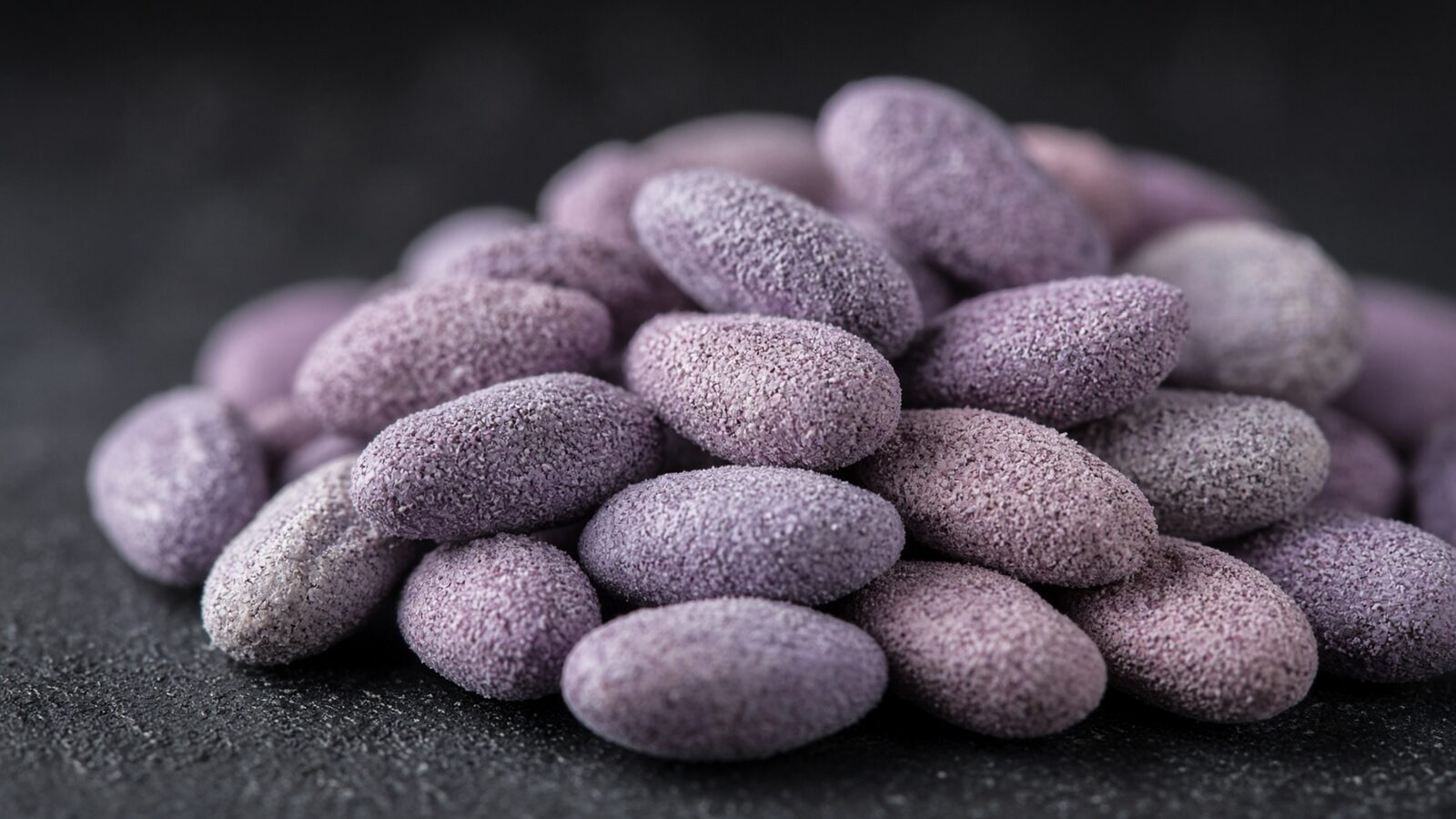
Package-level QR and scratch-code schemes are real, mature and already deployed at national scale — India's SATHI portal runs breeder-to-farmer traceability across sixteen states. They all share one structural weakness: slit the bag, refill it, and every downstream digital record stays perfectly valid and perfectly wrong.
Genetic fingerprinting closes that gap, but it needs a laboratory, a sample and days. Between the two sits a space nothing currently occupies — verifying the physical seed in the hand against the record that describes it.
What a seed marker cannot do
We state these first, because a seed company's technical director will ask inside the first five minutes and the answers are not flattering.
Our own marker
NULAND holds a physical microtaggant technology for seed-level identification, and it is in commercial use. What is not yet published is the technical specification — and we would rather leave that block visibly empty than fill it with the sort of language this field is full of. It will be published when each of the following is documented and independently checkable:
- What the marker physically is, and whether it sits on the seed, in the coating, or inside the seed
- What a positive read actually licenses you to conclude
- How it is read — field, dealer counter or laboratory — and at what cost and speed
- Measured false-positive and false-negative rates, and who measured them
- Its regulatory status as a seed-applied substance in each market we sell into
- A named reference deployment
Until those are in writing, treat this as a capability we are telling you about — not a specification we are asking you to buy on. If you are evaluating us on this, ask for the technical pack rather than the website.
If we cannot measure the reduction, we have not delivered one.
“Reduces chemical dependency” is a sentence anyone can write. The only version of it worth paying for is one attached to a number you can audit, with a baseline taken before we started.
Treatment Frequency Index
Farm-level and crop-specific, counted separately for fungicides. TFI expresses applications as a multiple of the registered label rate over the season, so halving a rate counts as half a treatment and a tank mix counts as its parts. It is the indicator European regulators actually use.
What you applied
Hazard-weighted load
A TFI line alone rewards swapping to a higher-hazard product at a lower rate. A load indicator weights each application by its hazard profile so that trade does not read as progress.
What it carried
Residue verification
A quaternary ammonium residue test on the harvested commodity. Because SporeKill leaves no residual activity, this is a check we expect to come back clean — and a clean result is evidence, not marketing.
What was left behind
Four bases, two hemispheres, one continuous season.
The footprint is not scattered — it is paired. Bogotá and Orlando sit at opposite ends of the busiest perishables corridor on earth. Hyderabad and Perth sit either side of the Indian Ocean, one the seed capital of India, the other the most biosecurity-strict horticultural market we operate in. Between the two clusters there are roughly twelve hours, which means an agronomy desk that never closes and a team that is never all in the off-season at once.
Cut flowers
Colombia is the world's second-largest cut-flower exporter — over 10,000 hectares, around USD 2.4 billion in exports and more than 200,000 people employed. Roses, carnations, chrysanthemums and gypsophila are all named on the SporeKill label, as is post-harvest container water. This is the single best product-to-market fit we have.
Protected & specialty crops
The receiving end of the Bogotá–Miami corridor, which runs up to 35 cargo flights a day in peak season, plus Florida's own nursery, greenhouse and citrus base. Cold rooms, packing sheds and dump tanks are the work here — and the strictest antimicrobial registration regime of the four.
Seed & protected cultivation
India's seed capital and home to ICRISAT's genebank. Seedling and nursery-stock hygiene, seed-tray and bench sanitation, polyhouse wet-walls. Protected cultivation is growing at roughly 11% a year on the back of capital subsidy, and every new structure is a new hygiene problem.
Horticulture & biosecurity
Western Australian horticulture — Wanneroo, Gingin, Harvey, and the semi-arid shade-house production at Carnarvon. An island-continent biosecurity regime makes this the hardest market to enter and the most valuable reference once you are in.
West Africa — export development
Separate from the four bases, we run food export programme work in West Africa, with KRP Ventures in Liberia and other partners. Liberia imports around 61% of its rice against a roughly USD 200 million annual import bill, exports cassava mostly as dried chips and gari, and loses a great deal of what it grows between harvest and market. The constraint is not agronomy — it is post-harvest handling, cold-chain hygiene and the documentation an importing market requires. That is the same base layer, in a market where fixing it changes more.
A registration does not travel.
SporeKill's South African approval is a South African approval. Every market we operate in requires its own registration before the product may be sold, advertised or have any efficacy claim made for it — and the permitted uses and rates are set by that country's label, not by this page. We publish the status openly because a distributor who is vague about this is telling you something.
| Market | Authority & instrument | Status | What it gates |
|---|---|---|---|
| South Africa | Act 29 disinfectant registration — ACT29 GNR529/27555/070/210, held by ICA International Chemicals | Registered | Origin registration. Basis of the label and rates shown on this page. |
| Australia | APVMA, Agvet Code — agricultural disinfectants carrying plant-pathogen claims sit with APVMA, not the TGA | Pathway open | Supply, advertising and any efficacy claim in WA and nationally. |
| India | CIB&RC under the Insecticides Act 1968 — s.3(e) captures substances used against fungi, so a bactericide or fungicide claim is in scope; import registration under s.9(3) | Pathway open | Import, sale and label claims. |
| Colombia | ICA — Registro Nacional de Plaguicidas Químicos de Uso Agrícola, Resolución ICA 1580 de 2022; the importer must be the registration holder | Pathway open | Import and commercialisation. Note: Colombia's regulator ICA is unrelated to the manufacturer ICA International Chemicals. |
| United States | US EPA under FIFRA, plus FDACS state registration for Florida. Precedent exists — a DDAC greenhouse product at 7.5% holds EPA Reg. No. 81820-2 | Pathway open | Sale and claims. Food-contact post-harvest use needs its own clearance. |
“Pathway open” means the regulatory route is identified and the dossier work is scoped — it does not mean the product is registered or available for sale in that market. Ask us for the current position before you plan around it. Where an edible crop is destined for export, the importing country's maximum residue limits govern, and that is a conversation to have with your importer before the first application, not after.
We would rather find out than assume.
Reducing chemical dependency is a claim anyone can make. Proving it requires a control block, a season, and a willingness to publish the result either way. These are the programmes we run and the ones we will co-fund with growers and institutions.
Inoculum load mapping
Water and surface sampling across a site — source water, header tanks, emitters, benches, trays, tools, cold rooms — repeated through a season to build a baseline and show what sanitation actually shifts. The output is a site score you can track year on year, not a one-off lab report.
Spray-count reduction trials
Replicated blocks comparing a conventional fungicide programme against the same programme with a sanitation layer underneath it. The endpoints that matter are number of curative applications, interval length, marketable yield and residue at harvest — not disease score alone.
Varietal phytotoxicity screening
The SporeKill label is explicit that not every cultivar's sensitivity can be verified in advance. We screen locally grown varieties before any commercial-scale recommendation, because the varieties in Carnarvon and the varieties in the Bogotá savanna are not the same varieties that were trialled in South Africa.
Post-harvest decay & cold-chain
Dump tank, hydrocooler and cold-room hygiene trials measuring decay incidence through to the receiving market. This is the programme that feeds directly into the West Africa export work, where post-harvest loss — not yield — is the binding constraint.
Tell us what you are losing, and where.
Whether it is a 40-hectare rose farm on the Bogotá savanna, a packhouse in Carnarvon, a seed nursery outside Hyderabad or a cassava aggregation point in Bong County — the first conversation is the same. What is your water doing, what is on your surfaces, and how many sprays are you making that you would rather not.
What to send us
- Crop, area and whether it is protected or open field
- Your water source, and whether it is recirculated
- Your current fungicide programme and spray count
- Where the produce ends up — domestic, or which export market
- Any certification you hold or are working toward
We will tell you honestly if sanitation is not your binding constraint. Quite often it is not, and selling you a drum would not fix it.